
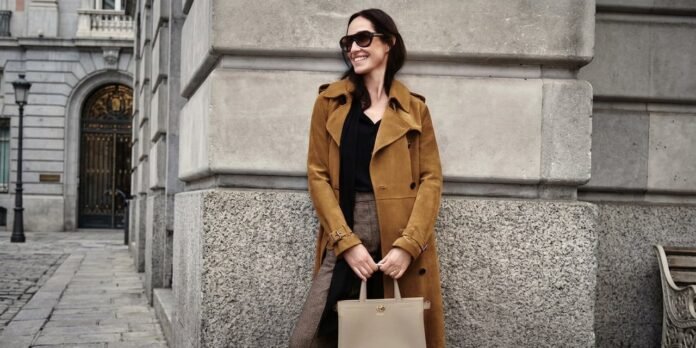
Old money style for women is a small wardrobe of well-made, unbranded classics in a narrow band of neutral colors: natural fabrics, easy cuts, and clothes kept long enough to look owned rather than bought. The whole thing runs on restraint, and restraint does not arrive in a single delivery.
Almost every guide on this subject goes straight to the shopping. The clothes are the easy part. The rules are what make them read correctly on the person wearing them.
The name arrived on TikTok around 2022. The rules are roughly a century older. What we now call old money dressing is what a particular kind of wealthy woman has worn since the 1930s, and the conventions were settled long before anyone filmed a get-ready-with-me about them.
This guide runs the rules first and the shopping after. You will learn what actually defines the look, which pieces carry it, which brands earn their price at each tier, and the specific mistakes that mark a woman as wearing the aesthetic rather than living in it.
Nobody writes that last section honestly. It is also where you will save the most money.
Discover more in our guides to the capsule wardrobe for women, smart casual style for women, and the best blazers for women.
The men’s side of this look works from the same instinct and a different set of rules. If you are buying for a partner, or dressing beside one, our guide to old money style for men covers the wardrobe there.
The look is far older than the name
Eleanor Lambert founded the International Best-Dressed List in 1940, and for the next four decades it functioned as the public record of how this woman dressed. The names on it were not designers. They were the customers.
Truman Capote called his circle of them “the swans.” Babe Paley, Slim Keith, C.Z. Guest, Gloria Guinness, Marella Agnelli and Lee Radziwill were photographed constantly, and the photographs are still what the aesthetic borrows from. Look at any of them and you will find the same things: flat shoes, a covered shoulder, one piece of jewelry, and a coat worn for years.
The fashion press attached “quiet luxury” to the same wardrobe in 2023, after Succession put it on television. Social media then renamed it again.
Old money, quiet luxury, understated elegance. The label keeps changing and the clothes do not.
The seven rules of old money style
Seven rules do the work. Once they are in place, the label on the collar stops mattering very much.
1. Read the composition label before the price tag
Wool, cashmere, silk, cotton and linen. Very little else belongs in here.
Natural fibers age into something. Linen creases and softens. Silk dulls a little and drapes better for it. Cashmere pills once and then settles. Polyester does the reverse. It shines at the seat and the elbow, it holds odor, and it looks worse every season it survives.
Womenswear is where this rule does the most filtering. A great deal of what is sold as old money style online is polyester cut into the right shape. It photographs beautifully for about one wear.
2. Nothing is tight
This wardrobe grew out of clothes made for country houses, boats and horses. All three need room to move, and the ease stayed in the clothes long after the horses left.
A blazer should close without pulling at the button. A skirt should sit still while you walk. A knit should skim the body instead of gripping it. If a garment shows you where everything is, it belongs to a different aesthetic.
3. Hemlines and necklines stay where they have always been
Knee-length or midi. A crew neck, a boat neck, or an open collar.
This is not modesty for its own sake. A hemline just below the knee and a covered shoulder read as unremarkable, and unremarkable is the entire goal. Clothes that direct the eye to the body are doing the opposite of what this look asks of them.
4. Six colors, and they all agree with each other
The range runs navy, camel, cream, gray, chocolate and black, plus white shirting and tan leather.
Everything inside that range works with everything else inside it. You stop assembling outfits and start simply getting dressed, and that is why these women look considered in photographs taken without warning.
Color arrives through a silk scarf or a single knit. It never arrives as a statement.
5. The bag is not the outfit
One good bag, carried until the leather goes soft. A structured tote in tan, chocolate or black handles almost every day of the year.
The it-bag is the clearest tell in all of womenswear. A bag whose main value is that strangers recognize it belongs to a different aesthetic, and everyone can tell which one.
6. Wear very little jewelry, and wear the same pieces daily
Gold studs or small hoops. One strand of pearls. A signet or a plain band. A thin watch on a leather strap.
Jewelry here should look inherited rather than chosen. That means few pieces, worn constantly, in one metal. Stacking works against it. Six rings, four chains and a tennis bracelet make a different look with a different name.
7. The clothes should look owned, not bought
Shoes get resoled. Moth holes get rewoven. Hems come up and waists come in.
A closet where nothing has been worn in reads as a costume, and it reads that way immediately. This is the one rule that cannot be rushed. It is also why a woman in a ten-year-old coat looks more convincing than a woman in five new ones.
The old money wardrobe for women, piece by piece
Buy in roughly this order. The first three pieces do most of the work.
The trench coat
The trench is the coat this wardrobe cannot do without. It goes over tailoring, over knitwear and over a dress, and it works for three seasons out of four.
Burberry has the strongest claim to it. Thomas Burberry invented gabardine in 1879, a tightly woven cotton that keeps rain out without the weight of rubberized cloth, and the officers’ coats cut from it during the First World War became the garment we still call a trench. Burberry’s trench coats are the reference every other version gets measured against.

BURBERRY
Trench coats
Buy it in honey, stone or black, size it to go over a jacket, and knot the belt instead of buckling it.
The camel coat
The camel coat handles winter. It is the piece that does the most work for the least thought, because it goes over everything in the palette above.
Loro Piana formalized its wool business in 1924 in Quarona, at the foot of the Italian Alps, and it now sources some of the finest cashmere and vicuña in the world. Loro Piana’s coats and knitwear sit at the top of this category, and the prices reflect it.

LORO PIANA
Cashmere coats and knitwear
If that is out of reach, Max Mara’s 101801 has been in production since 1981 and does the same job in the same color.
Cashmere knitwear
Two knits carry this wardrobe. A fine turtleneck in black, cream or camel, and a crewneck or polo collar in a neutral.
The Row was founded in 2006 by Mary-Kate and Ashley Olsen, who named it after Savile Row. The clothes carry no visible branding at all, and that absence is the entire proposition. The Row’s turtlenecks are what this aesthetic is genuinely built on.

THE ROW
Cashmere turtlenecks and knitwear
arch4 is the quieter option. The London label works in cashmere and very little else, and its collared and polo-neck knits sit under a blazer without adding bulk. arch4’s cashmere is where to look when The Row’s pricing does not work.

ARCH4
Cashmere knitwear
Our guide to the best cashmere sweaters for women goes deeper on grades, ply and care.
The white shirt
A white shirt is the most useful garment in this closet. Cotton poplin for the day, silk for the evening, cut loose enough to tuck without pulling.
Yves Saint Laurent opened his house in 1961 and spent the following decades borrowing from menswear, most famously with Le Smoking in 1966. Saint Laurent’s shirting still carries that inheritance in the high collars, the clean cuffs and the complete absence of decoration.

SAINT LAURENT
Silk and cotton shirting
See our guide to the best white shirts for women for the fits worth trying first.
Tailoring: trousers, skirts and the jacket
Two shapes cover most of the year. A wide, flat-fronted wool trouser, and a straight skirt that ends at or just below the knee.
Alessandra Rich works in tweed, wool crepe and silk, and cuts the ladylike, slightly retro shapes this aesthetic keeps returning to. The Princess of Wales has worn the label repeatedly. Alessandra Rich’s tailoring covers the occasion end of the wardrobe.

ALESSANDRA RICH
Tweed tailoring and occasion dressing
For the everyday version, Totême is the better buy. Elin Kling and Karl Lindman founded the Stockholm label in 2014 around a short list of shapes they repeat every season: the straight trouser, the boxy blazer, the scarf-print coat. Totême’s tailoring and outerwear comes closest to a ready-made uniform.

TOTÊME
Scandinavian tailoring and outerwear
Our guides to the best work pants for women and the best blazers for women cover both categories in detail.
Knitted dresses and separates
A knitted midi dress is the single easiest piece in this wardrobe to wear. It needs no styling, it travels without creasing, and it reads as considered on a day when nothing else does.
Catherine Holstein founded Khaite in New York in 2016 and built it on knitwear with real weight to it, cut close to the body without gripping it. Khaite’s knitwear and separates give the aesthetic its evening register.

KHAITE
Knitwear, dresses and separates
Loafers and flats
The loafer is the signature shoe of this look and it has been for seventy years. A penny loafer in brown or black leather works with trousers, with skirts and with dark denim.
Keep the sole thin and the toe rounded. Chunky lug soles and long square toes both date fast, and neither belongs here. Saint Laurent’s loafers are cut on the narrow last this wardrobe prefers.

SAINT LAURENT
Loafers and flats
Our guides to the best loafers for women and the best ballet flats cover the two flat shoes this wardrobe actually uses.
Boots
One pair of good boots covers the rest of the year. A knee-high riding boot in chocolate leather or suede, or a plain ankle boot on a low heel.
Avoid visible hardware, platforms, and any toe long enough to notice. Browse the women’s boots edit and filter for plain leather in a neutral.

MYTHERESA
Women’s boots
The bag
One bag, carried every day, until it softens into your own shape.
The right silhouette is a structured tote or a top-handle in smooth leather, in tan, chocolate or black, with the hardware kept to a minimum. Our guide to the best designer bags of all time covers the shapes worth the money, and the best tote bags for women covers the everyday end.
What matters most is that the bag stays quiet. If a stranger can name it from across a room, it is doing the wrong job.
Jewelry and the watch
The watch is the one place this wardrobe spends seriously, and it spends on something nobody is meant to notice.
Hermès began in 1837 as a harness workshop and established its own watch company, La Montre Hermès, in Biel, Switzerland in 1978. The Cape Cod and the Heure H are small, squared and completely quiet, and both sit under a shirt cuff without announcing anything. Hermès watches set the standard in this category.

HERMÈS
Women’s watches
For everything else, our guides to the best watches for women and the best jewelry brands cover the houses worth the money. You can also browse the wider women’s selection and ignore anything with a logo on the outside.
Old money aesthetic outfits: five looks that always work
These five combinations cover most of a year, and every one is assembled from the pieces above. Nothing here needs styling. That is the point.
1. The weekday uniform
A single-breasted blazer and wide trousers cut from the same cloth, in oatmeal linen or gray wool, over a soft shirt. Add a black top-handle bag, gold studs and a thin watch.
This is the outfit to own in multiples. It works in an office, at a lunch and on a plane, and it asks nothing of you at seven in the morning.

2. The country weekend
A herringbone tweed blazer over a white shirt, rust or chocolate corduroy trousers, a brown leather belt and brown boots.
Add a silk scarf if the weather asks for one. This look takes real wear better than any other on the list, and it improves as the tweed softens.

3. The summer look
Wide white trousers, a plain black or navy tee, flat leather sandals and a woven basket bag. Dark sunglasses in a plain frame if the sun asks for them.
Linen and cotton are meant to crease. Pressing them flat is the mistake most people make with this outfit.

4. The camel coat look
A camel coat over a tonal shirt and wide taupe trousers, brown loafers, one good leather bag.
Three shades from the same family and a single change of texture. This is the coldest-weather version of the aesthetic and the most photographed.

5. The evening look
A black knitted dress with a high neck, falling to the mid-calf or the ankle, worn with gold studs or pearls and plain flats.
No sparkle, no slit, no visible hardware. For anything with a stated dress code, our guides to cocktail attire for women and black tie attire for women take over from here.

The brands, tier by tier
The labels below are not equal. A few have dressed this customer since before anyone needed a name for it. Others opened after the hashtag.
The heritage houses
Hermès, Loro Piana, Burberry, Chanel, Ralph Lauren and Max Mara have been making these clothes for decades or longer. The prices are serious and the core pieces genuinely last. Buy one at a time, and buy the plainest thing each house makes.
The modern quiet-luxury houses
The Row, Totême, Khaite and arch4 all launched within the last twenty years, and all four built their identity on the absence of branding. They cost less than the heritage names and more than the high street. For most readers this tier is where the money should go.
The accessible end
COS, Uniqlo, Sézane, Everlane and J.Crew handle the basics without pretending otherwise. A Uniqlo cashmere crewneck and a well-cut COS trouser hold the look together for a year while you save toward the coat.
The labels selling the aesthetic back to you
A crowd of new labels put “old money” straight into their names and their advertising. Check what the clothes are made of before you check the price. A brand that sells the look without the making is charging you for a mood board.
What gives it away
These are the tells, and most of them are visible from across a room. Each one separates a woman who dresses this way from one who found the aesthetic six weeks ago.
The bag is doing all the talking. A recognizable it-bag with an otherwise plain outfit inverts the whole idea. The bag is supposed to be the least interesting thing you are carrying.
The beige is the entire plan. Head-to-toe oatmeal is a filter, not a wardrobe. This palette holds navy, chocolate, black and gray for a reason, and texture does more work than tone ever will.
The jewelry is stacked. Layered chains, mixed metals and a ring on every finger belong to a different decade. One metal, three pieces, worn daily.
The grooming is louder than the clothes. Long square nails, heavy contour and an hour-old blowout undo an outfit built on looking unbothered. Short clean nails and hair you can put up with one hand read correctly.
The fabrics photograph better than they wear. Polyester satin skirts, faux-suede loafers and acrylic knits sold as cashmere all look right in one photograph and wrong in person by the second wear.
Everything is tight. Bodycon knits and cropped blazers come from a different look entirely. Ease is not a preference here, it is the structure.
The logos are still there. A quilted flap with the clasp facing out, a monogram belt and a branded cap in one outfit cancel the exercise. These clothes are meant to be anonymous.
The whole outfit arrived in one box. Five perfect pieces bought together, all carrying the same fold crease, is the most common version of the mistake and the easiest one to spot.
How to build it slowly
A wardrobe assembled in a single weekend announces itself as one. Build this over a year instead.
Start with the coat. A trench or a camel coat is the piece people see first and the piece that dates slowest. The white shirt and the wool trousers come next, and those three alone already make several of the outfits above.
Then the cashmere knit, then the loafers, then the bag. The bag goes last on purpose. It costs the most per square inch and it is the easiest thing to get wrong while you are still learning what you reach for.
One good purchase every few months beats five adequate ones in a single weekend. You pay less per wear, the closet stays coherent, and the clothes get the time on them that makes the look convincing.
Our guide to the capsule wardrobe for women sets out the whole build, with the quantities that hold up in real life. Start there.

