
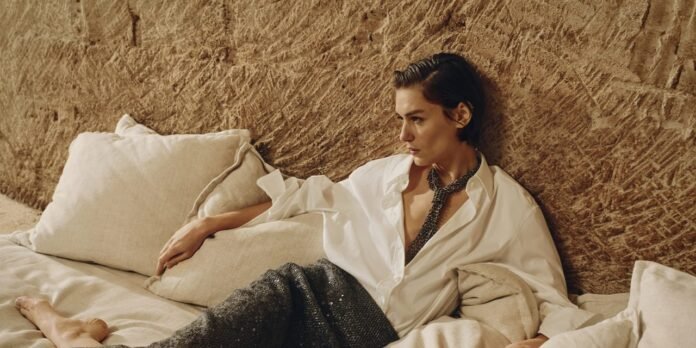
Semi-formal attire for women means a knee-length or midi dress in an elevated fabric, or tailored separates of the same dressiness, worn with heels. It is not a floor-length gown. It is not the dress you wear to the office either.
That one sentence settles most of it. Readers arrive at this dress code with three questions, and they are always the same three. How long should the dress be? How dressy is dressy enough? Does a cocktail dress count?
Here are the answers in order. The hem should fall between the knee and the ankle. The outfit should sit above what you wear to work and below what you wear to a black tie wedding. And yes, a cocktail dress counts.
Semi-formal is the code people get wrong most often. The reason sits inside the word. Half of it says formal, so some guests read a gown. The other half says semi, so others read a nice work dress. Both walk in feeling wrong, and both spend the evening knowing it.
This guide draws the line on both sides. You will see exactly how long to go, which fabrics carry the code, what to wear when a dress is not what you want, and how the outfit shifts between an afternoon and an evening.

- What is semi-formal attire for a woman?
- Length, fabric and neckline: the three decisions
- Semi-formal dresses worth owning
- What to wear instead of a dress
- Semi-formal by day and by evening
- Shoes, bags and jewelry
- Five mistakes that ruin a semi-formal outfit
- Frequently asked questions about semi-formal attire for women
What is semi-formal attire for a woman?
Semi-formal is a dress code that asks for polish without ceremony. For women it resolves into a dress that ends somewhere between the knee and the ankle, cut from a fabric with weight, drape or a little shine. Silk, crêpe, satin, velvet and lace all carry it. Cotton poplin and jersey do not.
The code exists to tell you that the evening is a step up from ordinary. Your host is not asking for a gown. They are asking you to look like you gave it thought.
Here is where semi-formal lands against the codes on either side of it.
Does a cocktail dress count as semi-formal?
Yes. Cocktail attire is the narrower evening code that sits inside semi-formal, so anything that passes for cocktail passes here. The reverse is not always true. A long-sleeved wool crêpe midi reads as semi-formal at an afternoon event and reads as slightly sober at a cocktail party.
If cocktail is the word on your invitation, our cocktail attire guide for women is the one you want. It goes deeper on the evening end of the range than this guide does.
The practical difference comes down to time of day. Cocktail is an evening code almost by definition. Semi-formal covers a two o’clock ceremony as comfortably as an eight o’clock dinner, and the outfit changes with the hour.
That overlap has a useful consequence when you shop. A designer cocktail dress is cut to the knee or the midi by definition, so buying from that rail settles the hardest decision in this guide before you have made it.

MYTHERESA
Cocktail dresses
Semi-formal versus black tie
Black tie asks for a floor-length gown. Semi-formal does not, and turning up in one is the single most visible way to overshoot this code.
The difference is not only length. Black tie invites embellishment, and it expects a clutch, real heels and jewelry chosen for the outfit rather than for the day. Read our black tie attire guide for women if that is what the invitation says, because the two codes ask for genuinely different wardrobes.

Why the code confuses so many women
The confusion is real, and it is not the reader’s fault. Hosts use semi-formal to mean anything from a hotel ballroom to a garden lunch, and the invitation rarely says which. Search for the term and most of what comes back is written for weddings, so the advice arrives pre-shaped for an event you may not be attending.
Two tests cut through it. Look at the venue and look at the hour. A six o’clock reception in a hotel means the dressier end of the range. A two o’clock ceremony in a garden means the lighter end. Everything else is detail.
Length, fabric and neckline: the three decisions
Almost every semi-formal outfit gets decided by three choices. Get these right and the rest follows.
How long should a semi-formal dress be?
A midi is the safe answer. A hem that falls between the knee and the ankle works at every semi-formal event you will ever be invited to, in every season, at every hour. If you want one rule from this guide, take that one.
Knee-length works and always has. Just above the knee works too, provided the fabric is dressy enough to carry it. The dress is doing more work at that length, so the material has to be visibly better than everyday.
Floor-length is the one to think twice about. It is not banned outright, and a simple column in a matte fabric can pass at an evening event. But a floor-length dress with structure, embellishment or a train belongs to black tie, and wearing one to a semi-formal party puts you a full code above the room.
Mini is a maybe, and the maybe depends entirely on the event. A short dress in heavy silk or lace reads as festive at an evening party. The same length at an afternoon wedding reads as underdressed.

Which fabrics carry the code
Fabric decides more than length does. A knee-length dress in silk crêpe is unquestionably semi-formal. The same dress in cotton jersey is not, and no amount of accessorizing rescues it.
Reach for silk, crêpe de chine, satin, wool crêpe, velvet, lace, chiffon and jacquard. In practice you are looking for one of three qualities: a fabric that holds a shape, a fabric that drapes properly, or a fabric that catches light.
Leave denim, jersey, linen, cotton poplin and anything ribbed for another day. Linen is the tempting one at a summer wedding, and it creases within an hour of sitting down.
Necklines, sleeves and how much to cover
Semi-formal is relaxed about necklines and strict about proportion. A halter, a boat neck, a square neck, a cowl and a simple V all sit comfortably inside the code.
The rule that actually matters is to pick one thing to reveal. A deep neckline works with a longer hem. A short hem works with a covered top. Doing both at once tips the outfit out of the code and into something else entirely.
Sleeves are free. A sleeveless dress is fine in summer, and a long sleeve in silk or lace is one of the most reliably elegant things you can wear to a winter event. If the venue is a stone church in February, take the sleeves.
Semi-formal dresses worth owning
A dress is the shortest route through this code, and four of them cover almost everything. Each of the pieces below sits in a house we return to for occasionwear, and each link lands on the label’s full collection so you can see the current range rather than one item.
The black midi that solves most invitations
Buy one very good black midi and you have answered this dress code for the next decade. It travels, it works by day with bare arms and by night with a coat, and nobody has ever looked at one and thought it was the wrong choice.
Givenchy makes the version of this dress we keep coming back to. The house cuts crêpe cady with almost no ornament and lets the drape do the work, and the Givenchy midi dresses are a lesson in how much a clean line is worth.

GIVENCHY
Midi and evening dresses
If you want the full argument for owning one, we made it in our guide to the best little black dresses.
The printed silk dress for daytime
Print is where semi-formal loosens up, and a printed silk dress is the daytime answer to this code. It reads as considered rather than solemn, and it photographs far better in daylight than black does.
Asceno builds its collection around washable silk in painterly prints, and a printed silk slip or midi from Asceno handles a garden ceremony without asking anything of you afterward. The fabric is the point here. Silk twill holds its shape through a long afternoon in a way that a synthetic print never does.

ASCENO
Printed silk dresses
The lighter dress for a summer event
Not every semi-formal invitation wants a dark dress. A summer ceremony, a lunch, an outdoor reception in July all call for something lighter, and this is where the code is most enjoyable.
Chloé is the house we point readers toward for this. The label’s silk crêpe de chine and muslin dresses carry lace trims and soft volume without tipping into costume, and a Chloé dress manages to look romantic and expensive at the same time. One caution that has nothing to do with the label. If the event is a wedding, stay away from white, ivory and cream.

CHLOÉ
Silk and lace dresses
If you would rather compare houses than commit to one, the summer dress edit gathers the lighter end of the season in one place. Read the fabric label before the price. A cotton poplin dress on that rail is a holiday dress, and a silk or a fine linen blend is the one that carries a ceremony.

MYTHERESA
Summer dresses
The occasion dress with something to say
Sometimes the point is not to blend in. A polka dot, a bow, a ruffle at the shoulder and a proper waist all belong to this code, and they turn a correct outfit into a memorable one.
Alessandra Rich has built an entire house on that idea. The Alessandra Rich occasion dresses run to lace midis, silk polka dots and defined waists. That combination is close to a uniform for a certain kind of European wedding guest. These are the least versatile dresses in this section and the most fun.

ALESSANDRA RICH
Occasion dresses
What to wear instead of a dress
Most guides to this dress code stop at dresses. That leaves out every woman who does not want to wear one, and it leaves out the single sharpest way to dress for a semi-formal evening.
Tailoring works here. It has worked here for fifty years. The rule is that the tailoring has to be dressier than what you wear to work, and the fabric is what does that job.

The trouser suit
A matched suit in silk, satin-trimmed wool or a fine crêpe is semi-formal, full stop. Wear it with a camisole or with nothing under the jacket, and keep the shoe dressy so the outfit does not slide back toward the office.
Saint Laurent is the reference point, and it has been since Le Smoking in 1966. The house’s evening blazers run to double-breasted silk and satin-faced wool, cut with the shoulder that makes the whole look work. Buy the jacket first. A good evening blazer earns its place over trousers, over a slip dress and over a midi skirt.

SAINT LAURENT
Evening blazers and suit jackets
Then buy the trousers to match it. Tailored suit trousers in wool, silk or a wool and silk blend are what separate an evening suit from an office one, and they are the half of the outfit most women are missing. Look for a wide leg or a clean straight cut that breaks once over the shoe. Skip anything cropped at the ankle, because that length reads as workwear no matter what the fabric is.

MYTHERESA
Suit trousers and tailoring
For the everyday end of the category, our guide to the best blazers for women covers the jackets that work Monday to Friday. You can also browse the full designer blazer edit if you want to compare houses side by side.
The blazer dress and the short structured dress
A blazer dress is the fastest outfit in this guide. One piece, one decision, and the tailoring supplies all the formality you need. Keep the hem at or below mid-thigh and keep the shoe simple, because the dress is already making a statement.
Balmain does the structured version better than anyone. The house cuts strong shoulders and defined waists into wool and tweed, and a structured Balmain dress or jacket holds its shape through a whole evening. Sequins and heavy embellishment push this into black tie territory, so choose the plainer version for a semi-formal night.

BALMAIN
Structured tailoring and short dresses
Separates, if a suit is too much
A silk blouse with a long satin skirt is semi-formal. So is a fine knit with wide-leg trousers in a dressy fabric. Separates give you the most control over proportion, and they are the most useful option if you already own good pieces.
Keep the two halves in conversation. One quiet piece and one interesting piece is the formula. Two interesting pieces read as a costume, and two quiet pieces read as work. Our business professional dress code guide shows where that second version lands, and it is a useful thing to look at so you can steer away from it.
Semi-formal by day and by evening
The same dress code asks for two different outfits, one for the afternoon and one for the evening. This is the distinction most readers miss, and it is the easiest one to act on.
By day, go lighter in every sense. Color, print and a matte fabric all belong here. A printed silk midi, a pale wool crêpe dress or a linen-blend suit in a summer weight all work at a two o’clock ceremony. Heels can be lower and blockier, because grass and gravel are real. Skip the sequins entirely.
By evening, go darker and let the fabric catch light. Black, navy, deep green and burgundy all read correctly after six. Satin, velvet and jacquard come into their own, and this is where a little shine is expected rather than tolerated. Heels get finer and the bag gets smaller.

The season pulls in the same direction as the hour. Summer wants lighter fabric and more color. Winter wants velvet, wool crêpe and sleeves. A dress that works in both is a genuinely useful thing to own, and that is one more argument for the black midi.
A semi-formal wedding follows all of the above and adds two rules. Do not wear white, ivory or cream. Do not wear a floor-length gown unless the invitation moves the code up. Beyond that, an afternoon ceremony is a daytime outfit and an evening reception is an evening one.
His half of the invitation is narrower and easier. A dark suit and a tie covers it, with the afternoon allowing mid-grey and brown shoes and the evening asking for navy or charcoal. Our guide to semi-formal attire for men has the rest.
Shoes, bags and jewelry
Accessories are where a correct outfit becomes a good one. They are also where most of the mistakes happen, because the temptation is to add one more thing.
Shoes
A heel is the default, and the height is yours to choose. A block heel, a kitten heel and a stiletto all satisfy this code, and the last one satisfies nobody if you cannot stand in it.
Dressy flats work too, and they work best when the rest of the outfit is doing the formal work. A pointed flat, a velvet mule or a heeled loafer under a long silk skirt looks deliberate. Tory Burch is our go-to for that register, and its shoes sit exactly on the line between polished and comfortable.

TORY BURCH
Shoes and accessories
For an evening event, a plain leather or satin pump in a dark color is the piece that never fails. Slingbacks give you the same line with more room to walk, and a designer pump in a neutral shade will outlast three dresses.

MYTHERESA
Designer pumps
If the venue involves standing, our guide to the most comfortable heels is worth reading before you buy.
Bags
Carry a clutch or a small crossbody. Nothing larger reads as semi-formal, and a tote reads as a commute.
The crossbody is the practical choice, and it is entirely acceptable at this code. Anyone who tells you a clutch is mandatory is quoting black tie rules at a semi-formal party. Our roundup of the best clutches covers both.

Jewelry
Pick one piece to notice. Statement earrings with a bare neckline, or a real necklace with a plain dress, or a cuff with everything else quiet. Layering all three is the most common way to make a good outfit look busy.
Metal follows the fabric. Gold sits well against warm tones, silk and velvet. Silver and white gold suit black, navy and anything with a cool shine. Our list of the best jewelry brands is where to start if you are building this part of the wardrobe properly.
Five mistakes that ruin a semi-formal outfit
Wearing a floor-length gown. This is the most common miss and the most visible. Semi-formal stops at the ankle.
Wearing your work dress. A ponte sheath is not semi-formal because you added earrings. The fabric gives it away from across the room.
Choosing the wrong material. Cotton, jersey, linen and denim all fail this code regardless of how the dress is cut. Fabric outranks silhouette every time.
Carrying a bag that is too big. A tote undoes an otherwise perfect outfit faster than any other single item.
Wearing white to a wedding. It still applies, it still causes trouble, and cream and ivory count.
The thread running through all five is that semi-formal is decided by material and proportion rather than by how much effort is visible. A plain midi in good silk beats an elaborate dress in a poor fabric at every event, every time.
If you are building a wardrobe that handles this code without a new purchase each time, our capsule wardrobe guide for women covers the pieces that keep earning their place. A dark midi, a good blazer and one pair of heels will carry you through most of the invitations you receive.

