
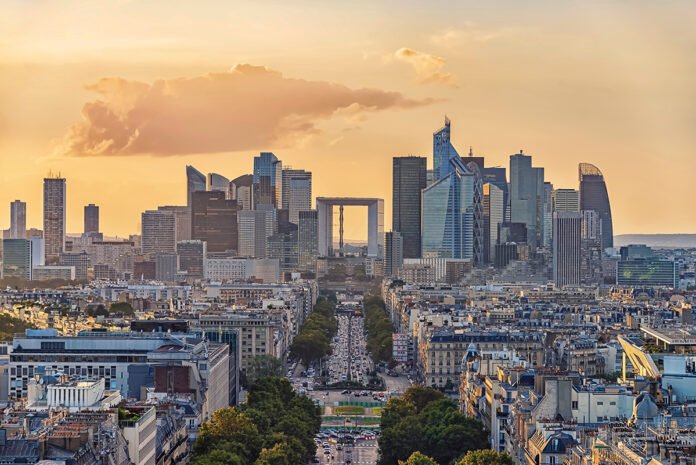
The most powerful cities in the world are not simply the largest or the wealthiest – they are the cities that command global influence across multiple dimensions: economic output, research and innovation, cultural reach, quality of life, environmental performance, and global connectivity.
Each year, Japan’s Mori Memorial Foundation publishes the Global Power City Index (GPCI), the definitive ranking of city power across 48 of the world’s major urban centres. The index assesses 72 indicators across six core functions – Economy, Research and Development, Cultural Interaction, Livability, Environment, and Accessibility – to produce a comprehensive picture of which cities truly lead the world.
What Are the Most Powerful Cities in the World?
The latest GPCI results, published in January 2026, tell a fascinating story. East Asian cities – led by Tokyo’s historic rise to second place – are challenging Western dominance as never before. Inflation is reshaping the Livability rankings of New York, Paris, and Amsterdam. And London, for the 14th consecutive year, sits atop them all.
Below, we rank the 18 most powerful cities in the world for 2026, drawing on the latest GPCI data and our own first-hand experience travelling and reporting across the globe for Luxury Columnist.
How Is City Power Measured?
The Global Power City Index measures what it calls a city’s ‘magnetism’ – its ability to attract people, capital, and enterprises from around the world. The six functions assessed are:
Economy: GDP, stock market capitalisation, wage levels, corporate tax rates, and workplace diversity
Research and Development: Number of researchers, patents, top universities, and R&D expenditure
Cultural Interaction: Foreign visitors, number of hotel rooms, nightlife, dining, tourist attractions, and international students
Livability: Safety, medical services, workstyle flexibility, price levels, and quality of life indicators
Environment: CO2 emissions, renewable energy use, urban greenery, biodiversity, and climate action commitments
Accessibility: Air transport capacity, direct international flights, commuting infrastructure, and ease of mobility
No single city leads in all six functions. The most powerful cities in the world are those that maintain exceptional performance across the broadest range – and that balance is what the rankings below reflect.
The 18 Most Powerful Cities in the World (2026)
1. London, United Kingdom
GPCI 2025 Rank: #1 | Strengths: Cultural Interaction (#1), Accessibility (#1), Economy (#2), R&D (#2)
London has held the top spot in the Global Power City Index for 14 consecutive years, and in 2026 it shows no signs of relinquishing the crown. As our home city, we can vouch for why this extraordinary capital continues to outpace every rival on earth.
London ranks first in the world for Cultural Interaction and Accessibility – a city of 300 languages, six international airports, and an Underground network that connects you to almost anywhere in minutes. The National Gallery, Tate Modern, the Barbican, and the West End alone would justify its cultural dominance.
Add to that the sheer concentration of world-class universities, international law firms, and startups, and you begin to understand why global talent gravitates here.
From the Michelin-starred restaurants of Mayfair to the suite at the Shangri-La at The Shard, every visit to this city rewards. Its slight score dip in the latest index is a footnote – London remains, definitively, the world’s most powerful city.
One caveat worth noting for visitors: phone theft remains a genuine issue in London, and one that has worsened significantly in recent years. Over 116,000 phones were stolen in the capital in 2024 – roughly one every four and a half minutes – with Westminster the worst-affected borough.
The Met’s subsequent crackdown has reduced that figure by around 12% in 2025, but it remains high by any European comparison. Keep your phone in an inside pocket or cross-body bag on the Underground, stay alert in crowded tourist areas, and treat your device as you would your passport.

2. Tokyo, Japan
GPCI 2025 Rank: #2 | Strengths: Livability (#1), Cultural Interaction (#2), Nightlife (#1), Environment (#7)
Tokyo made history in the GPCI 2025, rising to second place for the very first time since the index launched in 2008. After nine consecutive years in third, Japan’s capital has emphatically announced itself as London’s closest challenger.
What makes Tokyo’s rise so compelling is how it got there. This is not a city that surged on economic metrics – Tokyo actually declined slightly in Economy rankings.
Instead, it soared on Livability (ranked first in the world) and Cultural Interaction (second globally), driven by record-breaking international tourism, an unrivalled nightlife scene, and the residual momentum of hosting the World Athletics Championships in 2025.
Tokyo rewards the luxury traveller unlike almost anywhere else. Omakase dining at a 3-Michelin-star counter, a stay at Aman Tokyo or the Park Hyatt (yes, that one), bespoke tailoring in Ginza, and a cultural depth that takes years to fully absorb. Tokyo is the world’s great slow-burn destination.

3. New York, USA
GPCI 2025 Rank: #3 | Strengths: Economy (#1), R&D (#1), Stock Market (#1), R&D Expenditure (#1)
New York recorded the steepest score decline of any city in the GPCI 2025, slipping to third for the first time since 2012. The culprit? Cost of living. The city ranked last in Price Level under the Livability function, and its Environmental scores took a hit from worsening temperature comfort.
But make no mistake – New York remains the economic capital of the world. It leads globally in Stock Market Capitalisation, R&D Expenditure, and Research and Development, and no city comes close to matching its concentration of financial firepower. Wall Street, the Federal Reserve, and the headquarters of the world’s most powerful asset managers all call this city home.
For the luxury visitor, New York is still extraordinary. The recently reopened Waldorf Astoria following its £1.5 billion renovation, the dining rooms of Per Se and Le Bernardin, and the retail corridors of Fifth Avenue and Madison Avenue make this one of the world’s great indulgences – if you can afford it.

4. Paris, France
GPCI 2025 Rank: #4 | Strengths: Cultural Interaction (top tier), Accessibility (#2), Tourism
Paris moved closer to New York in GPCI 2025, boosted by the extraordinary afterglow of the 2024 Summer Olympics. The city welcomed a record number of international visitors in the year following the Games, and its Accessibility ranking surged to second globally, overtaking New York.
Having spent over 11 years living in France, I can say with confidence that Paris operates on a different cultural plane to any other European city. The Louvre, the Musée d’Orsay, the Palais Royal, the grand boulevards Haussmann designed – it is a city that exists as art.
The Plaza Athénée, Le Bristol, and the Ritz remain among the world’s most coveted hotel addresses. Dinner at Guy Savoy or L’Ambroisie, shopping on Rue Saint-Honoré, and a private tour of Versailles – Paris does not merely compete at the top of any luxury ranking, it defines the category.

5. Singapore
GPCI 2025 Rank: #5 | Strengths: Biodiversity (#1), Urban Greenery (#1), Economy (GDP per Capita), Air Transport
Singapore holds fifth place in the GPCI 2025 with characteristic quiet confidence. While inflationary pressures caused its Livability ranking to fall to 31st globally – largely due to the punishing cost of living – its strengths in Environment (first in the world for Biodiversity and Urban Greenery among top-10 cities) and Accessibility (a global hub for air transport) kept it firmly in the upper tier.
This is a city-state that has engineered itself into global relevance through sheer will and intellect. It is simultaneously the gateway to Southeast Asia and one of the world’s top three financial centres. Its workforce is multilingual, its infrastructure faultless, and its airport – Changi – frequently ranked the world’s best – is a destination in its own right.
For luxury travellers, Singapore offers the Raffles Hotel (the iconic Long Bar and Writers Bar alone justify a visit), the Marina Bay Sands, extraordinary hawker food elevated to artform, and Gardens by the Bay as one of the world’s most breathtaking horticultural achievements.

6. Seoul, South Korea
GPCI 2025 Rank: #6 | Strengths: R&D (#5), Patents (#2), Researchers (#3), Corporate Sustainability (#4)
Seoul is the GPCI 2025’s most exciting climber in the top tier, recording the largest score increase of any top-10 city. Fuelled by K-culture’s relentless global expansion – K-pop, K-drama, K-beauty, and Korean cuisine all at peak international influence – Seoul improved across Cultural Interaction, attracting more foreign visitors, higher nightlife ratings, and stronger dining evaluations than in any previous year.
Beyond the cultural spectacle, Seoul is a serious innovation powerhouse. It ranks fifth globally in R&D, second in number of patents, and third in number of researchers. Companies like Samsung, Hyundai, and LG are headquartered here, and the city’s tech startup ecosystem is one of Asia’s most dynamic.
The luxury visitor will find Seoul surprisingly sophisticated. The Four Seasons Seoul, Signiel Seoul in the Lotte World Tower – the world’s fifth-tallest building – and the high-fashion boutiques of Cheongdam-dong make this one of Asia’s most compelling luxury city-break destinations.

7. Amsterdam, The Netherlands
GPCI 2025 Rank: #7 | Strengths: Workstyle Flexibility, Biodiversity (#10), Livability
Amsterdam holds seventh place in the GPCI 2025, though it faced headwinds from the same inflationary pressures squeezing other Western European cities. Price Level declines and softer scores for Tourist Attractions and Nightlife Options were offset by improved Workstyle Flexibility and a strong environmental performance, including a top-10 global ranking for Biodiversity.
What Amsterdam lacks in sheer economic scale it compensates for in quality of life and cultural richness. The Rijksmuseum and Van Gogh Museum alone would make this city significant; paired with the canal-ring architecture, the cycling infrastructure, and the extraordinary concentration of galleries and independent dining, it is among Europe’s most livable cities.
For the luxury traveller, Amsterdam offers the Waldorf Astoria (housed across six 17th-century canal mansions), the InterContinental Amstel, and a dining scene that is quietly one of the continent’s best. De Librije and Ciel Bleu both hold two Michelin stars and reward the short flight from London handsomely.

8. Shanghai, China
GPCI 2025 Rank: #8 | Strengths: R&D, Accessibility (#4), Air Passengers, Tourism Recovery
Shanghai’s rise to eighth in the GPCI 2025 is one of the index’s defining stories of the year. Having languished as low as 15th in previous years due to COVID-era travel restrictions, the city has surged back on the strength of its tourism recovery, stronger R&D credentials, and a dramatic improvement in Accessibility – rising to fourth globally in that function, driven by a massive increase in air passenger numbers.
The Bund at night, with its illuminated colonial architecture facing the futuristic Pudong skyline across the Huangpu River, is arguably the most dramatic cityscape on earth. Shanghai’s 26 Michelin-starred restaurants (as of the latest guide) reflect a city that takes dining seriously.
For luxury travel, the Waldorf Astoria Shanghai on the Bund and The Peninsula Shanghai set an extraordinarily high standard. The city’s high-speed rail connections to Beijing and beyond make it a natural gateway to wider China.

9. Dubai, UAE
GPCI 2025 Rank: #9 | Strengths: Economy (top 10), Foreign Residents (#1 historically), Luxury Hotels, Unemployment (#1)
Dubai slipped one position to ninth in the GPCI 2025 but remains the Middle East’s only representative in the top 10 – a remarkable achievement for a city that barely appeared in global rankings two decades ago. Its Economy ranking entered the top 10 for the first time in 2025, driven by strong GDP growth, and its infrastructure continues to set global benchmarks.
Dubai’s power lies in its extraordinary ambition. Putting the difficult current events aside, the city has built a global financial hub, an international aviation gateway and a luxury tourism ecosystem that competes directly with London and Paris. The number of luxury hotel rooms per capita is virtually unmatched anywhere on earth.
For the luxury traveller, Dubai offers Burj Al Arab (the world’s most iconic hotel silhouette), Atlantis The Royal, and the extraordinary dining of Zuma, Nobu, and Torno Subito. The Dubai Mall alone – 1,200 stores, an indoor ski slope, and an Olympic-sized ice rink – says everything about the city’s scale of ambition.

10. Berlin, Germany
GPCI 2025 Rank: #10 | Strengths: R&D, Startup Ecosystem, Cultural Scene, Livability
Berlin rounds out the GPCI 2025 top 10, having been surpassed by the surging East Asian cities of Shanghai and Seoul in recent years. Yet Berlin’s position reflects something enduring: this is a city of extraordinary intellectual and creative output, home to three UNESCO World Heritage Sites, over 170 museums, and one of the world’s most celebrated nightlife and arts scenes.
Germany’s capital is the startup capital of continental Europe, with a tech ecosystem that has produced companies like Zalando, Delivery Hero, and HelloFresh. Its universities and research institutions rank among Europe’s strongest, and its R&D output remains a core pillar of its GPCI score.
The Hotel Adlon Kempinski – overlooking the Brandenburg Gate – remains one of Europe’s great historic hotels. The restaurant scene, anchored by Tim Raue and Rutz (both Michelin-starred), punches well above Berlin’s budget-city reputation. This is a capital that rewards the curious.

11. Beijing, China
GPCI 2025 Rank: #12 | Strengths: R&D, World’s Top Bank Headquarters (#1), Innovation Output
Beijing has risen dramatically in the GPCI 2025, climbing from 16th to 12th place as China’s capital reasserts its global influence. Its strength is concentrated in two areas: R&D, where it leads the world in bank headquarters concentration and places highly for research output, and Cultural Interaction, where its status as a heritage tourism magnet is without peer.
The Forbidden City, the Great Wall (accessible in under an hour from the city centre), the Temple of Heaven, and the Summer Palace collectively represent one of the world’s greatest concentrations of historical monuments. Beijing’s hutong neighbourhoods, increasingly gentrified into boutique hotels and design bars, offer a contrasting intimacy to the city’s monumental scale.
For luxury travel, the Rosewood Beijing, Aman at Summer Palace – occupying traditional courtyard buildings adjacent to the imperial grounds – and the Peninsula Beijing set exceptional standards. Beijing is China’s political and cultural capital, and it carries that weight with considerable grandeur.

12. Vienna, Austria
GPCI 2025: Top 15 | Strengths: Environment, Livability, Cultural Heritage, Quality of Life
Vienna consistently ranks as one of the world’s most livable cities, and the GPCI reflects this through strong Environment and Livability scores that European capitals with larger economies cannot match. The city’s commitment to sustainability, green infrastructure, and public transport is among the most advanced in the world.
As the former seat of the Habsburg Empire, Vienna carries an almost overwhelming cultural inheritance. The Kunsthistorisches Museum, the Vienna State Opera, the Belvedere, the Albertina – this is a city where walking becomes an act of cultural consumption. The Ringstrasse, that grand boulevard of imperial architecture, remains one of Europe’s most beautiful urban spaces.
The city is quietly spectacular, particularly during the festive season with its impressive Christmas markets. The Hotel Sacher (home to the original Sachertorte since 1832), Rosewood Vienna, and the Park Hyatt all deliver exceptional experiences. Dinner at Steirereck im Stadtpark, consistently ranked among Europe’s top restaurants, should be on every serious food traveller’s list.

13. Sydney, Australia
GPCI 2025: Top 15 | Strengths: Environment, Livability, Quality of Life, Urban Greenery
Sydney is the southern hemisphere’s most globally significant city, and its GPCI ranking reflects strength in Environment and Livability that its Pacific Rim peers struggle to match. The city benefits from extraordinary natural assets – the harbour, the coastal national parks, the beaches – that contribute to livability scores that consistently outperform much larger cities.
Sydney’s global credentials are real: it is a significant financial centre for the Asia-Pacific region, home to the Australian Securities Exchange, and a hub for tech, media, and professional services across the region. Its universities are among the southern hemisphere’s strongest, and its international airport connects it to virtually every major global city.
For luxury travel, Sydney delivers the Park Hyatt with its direct Opera House views, Quay restaurant (one of the world’s most acclaimed), and a food and wine culture rooted in extraordinary Pacific produce. The harbour itself – whether seen from a ferry, a seaplane, or a clifftop walk – is one of the world’s genuinely unmissable natural spectacles.

14. Stockholm, Sweden
GPCI 2025: Top 18 | Strengths: Environment, Innovation, Sustainability, Workstyle Flexibility
Stockholm is the Nordic world’s pre-eminent global city, consistently ranking among Europe’s strongest performers in Environment and Innovation. Sweden’s capital is home to a startup ecosystem that has produced more billion-dollar companies per capita than almost any other city on earth – Spotify, Klarna, King, Mojang, and iZettle all emerged from this small but extraordinarily productive city of under a million people.
Built across 14 islands where Lake Mälaren meets the Baltic Sea, Stockholm is also one of the world’s most beautiful capitals. Gamla Stan (the Old Town), with its amber and ochre medieval buildings reflected in the water, is one of Scandinavia’s most visited attractions, and the archipelago beyond the city offers thousands of islands to explore.
The Grand Hotel Stockholm overlooking the Royal Palace and the Nobel Prize ceremony venue is one of Europe’s great historic hotels. The dining scene, centred on neighbourhood restaurants championing New Nordic cuisine and exceptional Scandinavian produce, makes Stockholm a serious culinary destination.

15. Toronto, Canada
GPCI 2025: Top 18 | Strengths: Diversity, Economy, R&D, Financial Services
Toronto is consistently North America’s most underrated global city. Canada’s financial capital ranks strongly in Economy and R&D, is home to the Toronto Stock Exchange and the headquarters of Canada’s major banks, and hosts one of the world’s most genuinely multicultural populations – over 200 languages are spoken here, and nearly half the population was born outside Canada.
The city’s university ecosystem is formidable: the University of Toronto is consistently ranked among the world’s top 25, and its AI research output – Geoffrey Hinton did much of his foundational deep learning work here – has made Toronto one of the world’s most important technology cities. The MaRS Discovery District is one of the world’s largest urban innovation hubs.
The Four Seasons Toronto in Yorkville, Alo restaurant (one of Canada’s finest dining experiences), and the extraordinary cultural facilities of the Royal Ontario Museum and the Art Gallery of Ontario make this a city worth a dedicated visit, not merely a stopover.

16. Los Angeles, USA
GPCI 2025: Top 20 | Strengths: Cultural Output, Entertainment, R&D, Universities
Los Angeles is arguably the world’s most influential cultural export machine. Hollywood, the music industry centred on labels across the Sunset Strip, the streaming studios of Netflix and Disney, and the art world’s February convergence point (with the Getty, LACMA, and The Broad) make LA the planet’s most prolific producer of global culture.
The Hotel Bel-Air, the Peninsula Beverly Hills, and the Chateau Marmont all carry a celebrity-soaked mystique that few hotels anywhere can replicate. Nobu Malibu, Providence, and Spago remain among America’s most sought-after dining reservations.
The city’s R&D credentials are often overlooked. Caltech, UCLA, and USC collectively rank among the world’s elite research universities, and the tech ecosystem of Silicon Beach – centred on Venice and Santa Monica – has produced Snapchat, Tinder, and Dollar Shave Club, among many others. LA is increasingly a serious technology city alongside its entertainment identity.

17. Hong Kong, China
GPCI 2025: Top 20 | Strengths: Financial Services (top 5 globally), Accessibility, Connectivity
Hong Kong’s position in the GPCI reflects an enduring reality: this is one of the world’s most important financial centres, ranking fifth globally in the GPCI Financial Centers index, with exceptional scores in Foreign Exchange markets and highly skilled financial personnel. Despite significant political changes in recent years, the city’s financial infrastructure remains formidable.
Physically, Hong Kong is one of the world’s most dramatic cities. The skyline viewed from Victoria Peak at dusk – ranked by many architects and urbanists as the most impressive in the world – and the density of the Kowloon streetscape create a visual energy unlike anything else. The Star Ferry crossing Victoria Harbour remains one of the world’s great five-minute journeys.
The Peninsula Hong Kong is simply one of the world’s great hotels – its harbour-view suite rooms and the rooftop Felix Bar are legendary. Amber restaurant at the Mandarin Oriental recently relaunched to enormous acclaim. The city’s airport is one of Asia’s best-connected, making it an ideal base for exploring the wider region.

18. Copenhagen, Denmark
GPCI 2025: Top 20 | Strengths: Environment, Sustainability, Livability, New Nordic Cuisine
Copenhagen is the world’s most admired sustainable city, consistently leading global Environment rankings and setting the agenda on urban climate action that larger cities are only now beginning to follow. Its cycling infrastructure – used by over 60% of residents for their daily commute – and ambitious carbon-neutral targets have made it a global model for urban planning.
Beyond its green credentials, Copenhagen is a city of genuine cultural weight. The National Museum, the Louisiana Museum of Modern Art just north of the city, and a classical music tradition centred on the Copenhagen Opera House give it cultural depth disproportionate to its size. It is also, quietly, one of the world’s most beautiful capitals – the coloured facades of Nyhavn are among Europe’s most photographed streetscapes.
The city is now firmly on the global dining map. Noma’s extraordinary 16-year run redefined what restaurants could be, and its closure in 2024 only intensified scrutiny of what comes next in a city where dining culture is genuinely world-class. The Nimb Hotel at Tivoli Gardens and the d’Angleterre remain Copenhagen’s finest addresses.

Frequently Asked Questions
What makes a city the most powerful in the world?
According to the Global Power City Index (GPCI), published annually by Japan’s Mori Memorial Foundation, city power is measured across six functions: Economy, Research and Development, Cultural Interaction, Livability, Environment, and Accessibility. A total of 72 indicators are assessed across these six areas to produce an overall ranking of the world’s 48 major cities.
Which is the most powerful city in the world in 2026?
London is the most powerful city in the world according to the latest GPCI, holding the top position for the 14th consecutive year. It ranks first globally in Cultural Interaction and Accessibility, and second in both Economy and R&D.
Which city has the most powerful economy in the world?
New York leads the world in Economy and R&D in the latest GPCI, ranking first in Stock Market Capitalisation and Research and Development Expenditure. Despite dropping to third overall (largely due to cost of living), New York’s economic dominance is unrivalled.
Which Asian city is the most powerful in the world?
Tokyo is the most powerful Asian city in the world, ranked second overall in the latest GPCI – its highest-ever position. It ranks first globally in Livability and second in Cultural Interaction. Seoul (6th) and Shanghai (8th) are Asia’s other top-10 representatives.
Why did New York drop in the global power city rankings?
New York recorded the steepest score decline of any city in the GPCI 2025, falling from 2nd to 3rd overall. The main factors were soaring cost of living (the city ranked last globally in Price Level) and worsening environmental scores related to temperature comfort. Its economic dominance remains intact.
Is London still the most powerful city in the world?
Yes. London is ranked #1 in the GPCI 2025, holding the top position for the 14th consecutive year since 2012. It leads the world in Cultural Interaction and Accessibility, and despite a slight overall score decline, no other city comes close to matching its combination of strengths.
Conclusion
The most powerful cities in the world in 2025 reflect a world in transition. East Asian cities – led by Tokyo’s historic debut at number two – are reshaping a hierarchy that once seemed fixed. Inflation is testing the liveability of Western capitals. And environmental performance is becoming an increasingly decisive factor in how cities are judged on the global stage.
What does not change is that the cities at the top of this list remain the world’s most extraordinary places to visit. Whether you are drawn to London’s cultural breadth, Tokyo’s unrivalled livability, Paris’s luxury benchmark, or the sheer ambition of Dubai, each city on this list rewards the luxury traveller with experiences that justify the journey.
Check back each year as the Global Power City Index is updated – because the race for global influence is, right now, more competitive than it has ever been.
Read next:

